Description
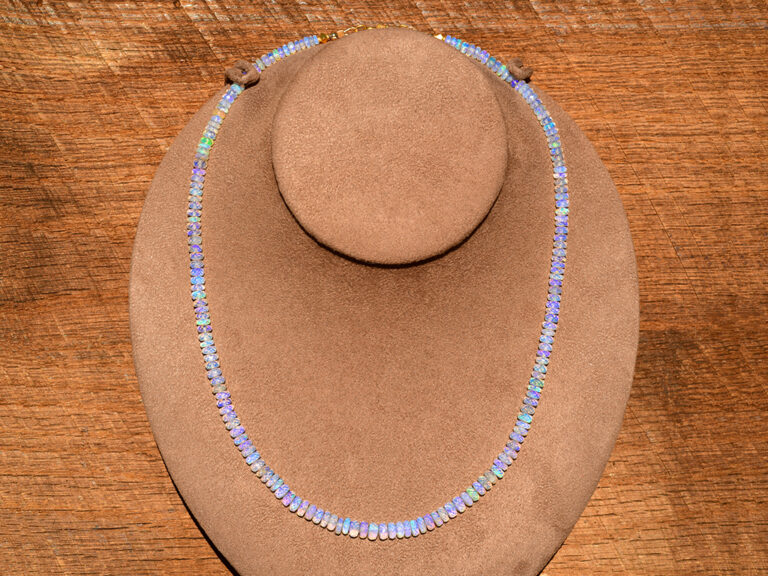
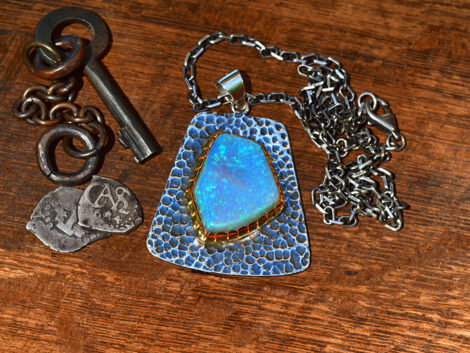
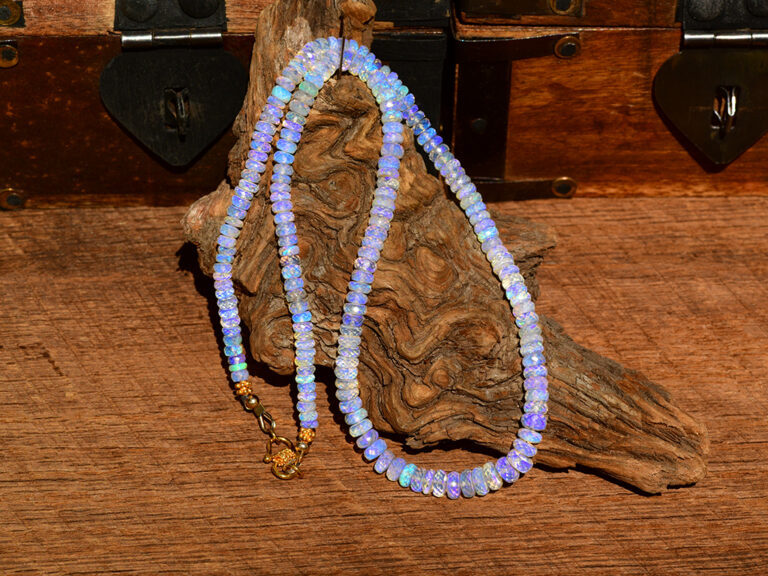
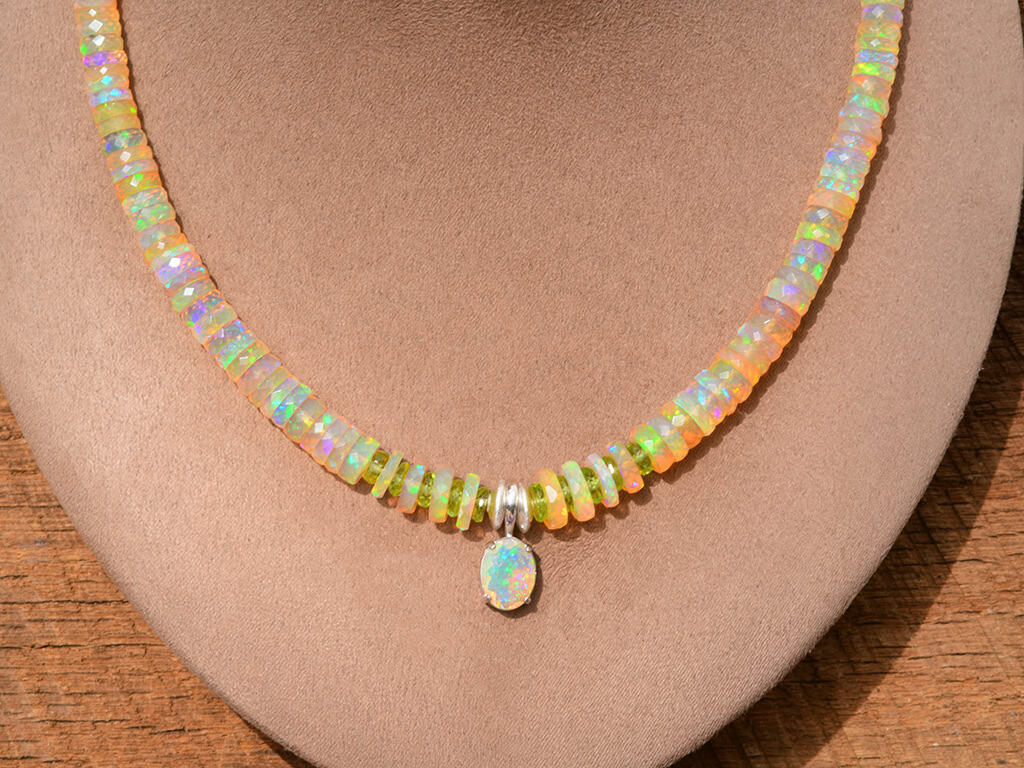
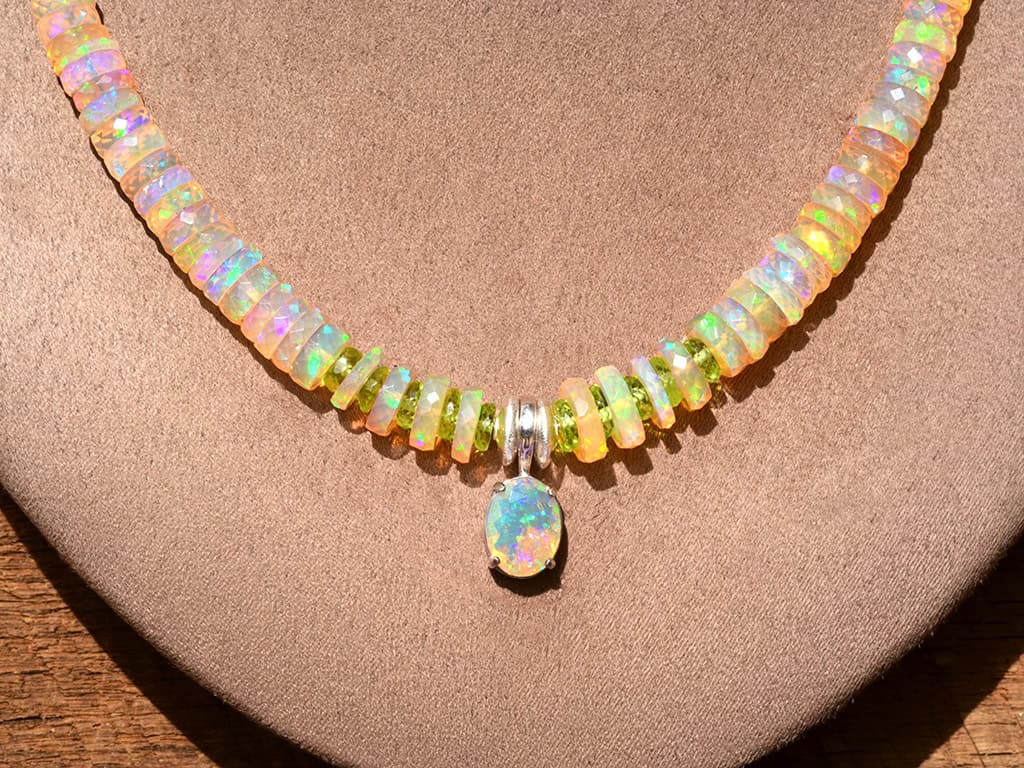
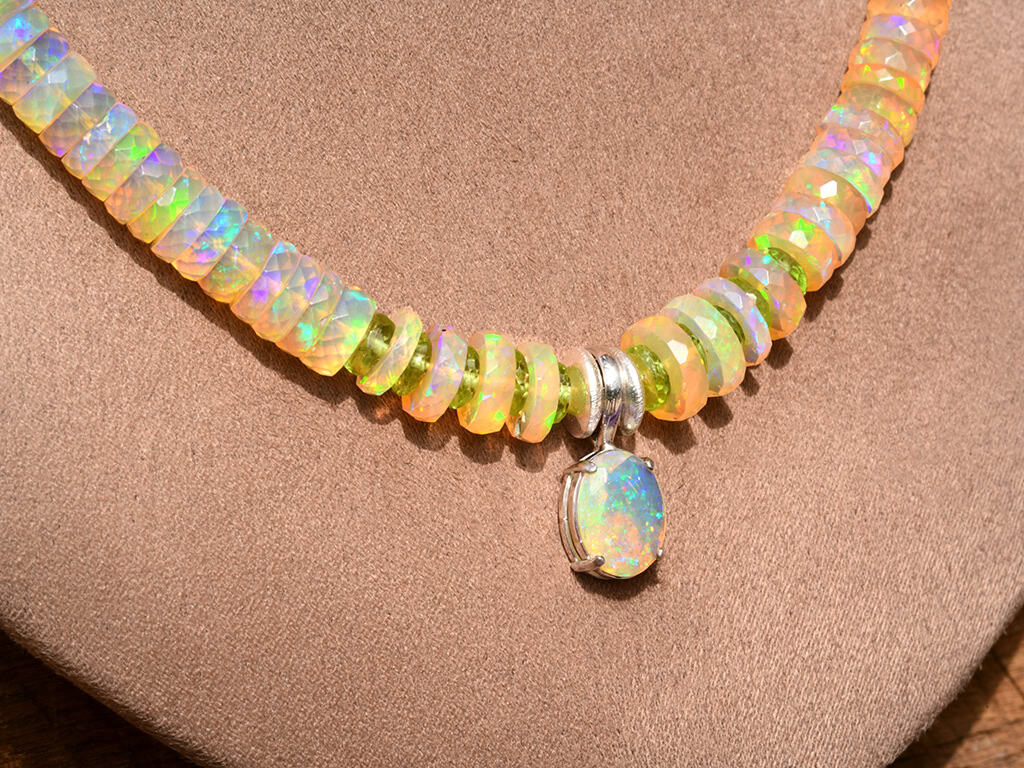
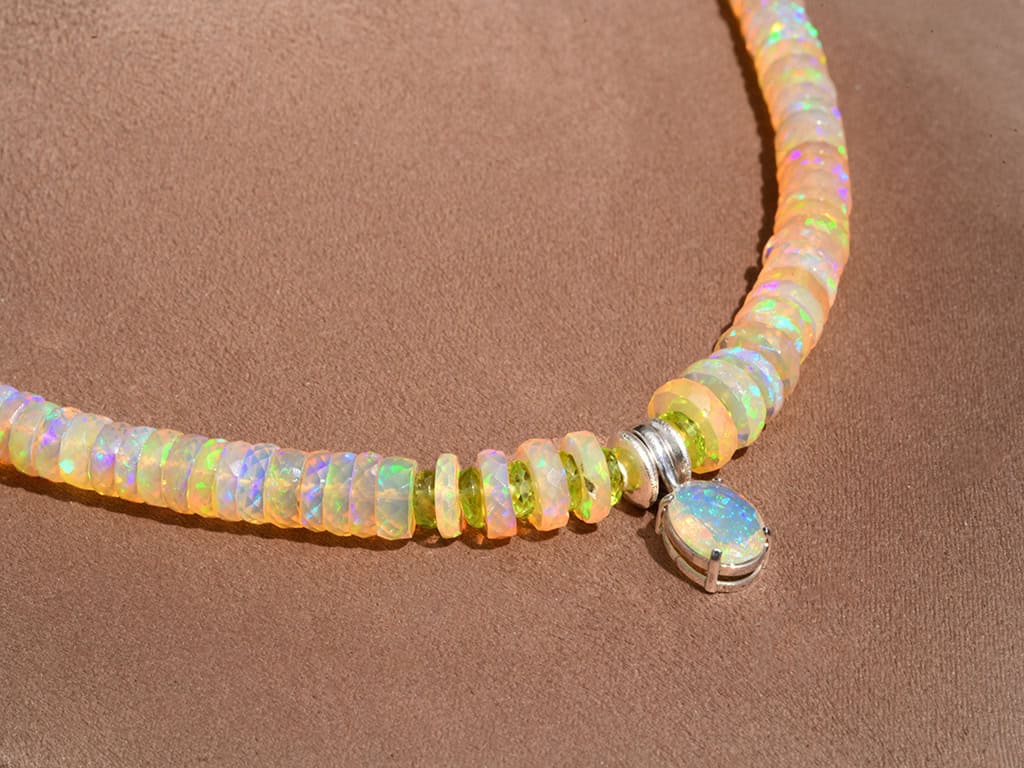
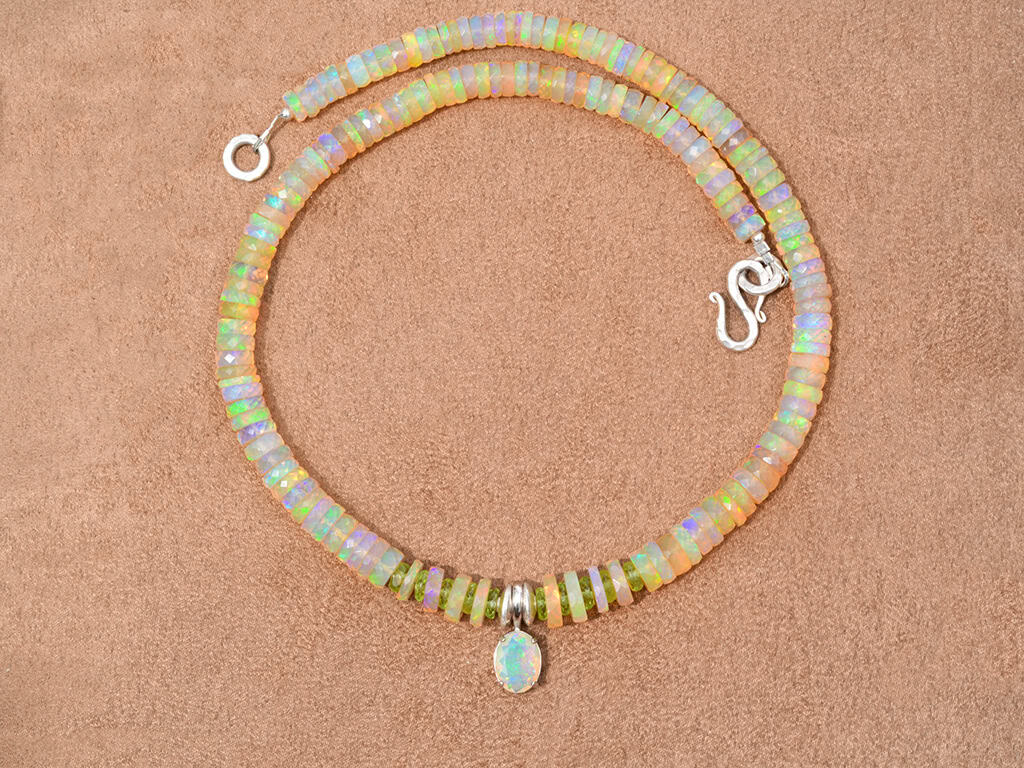
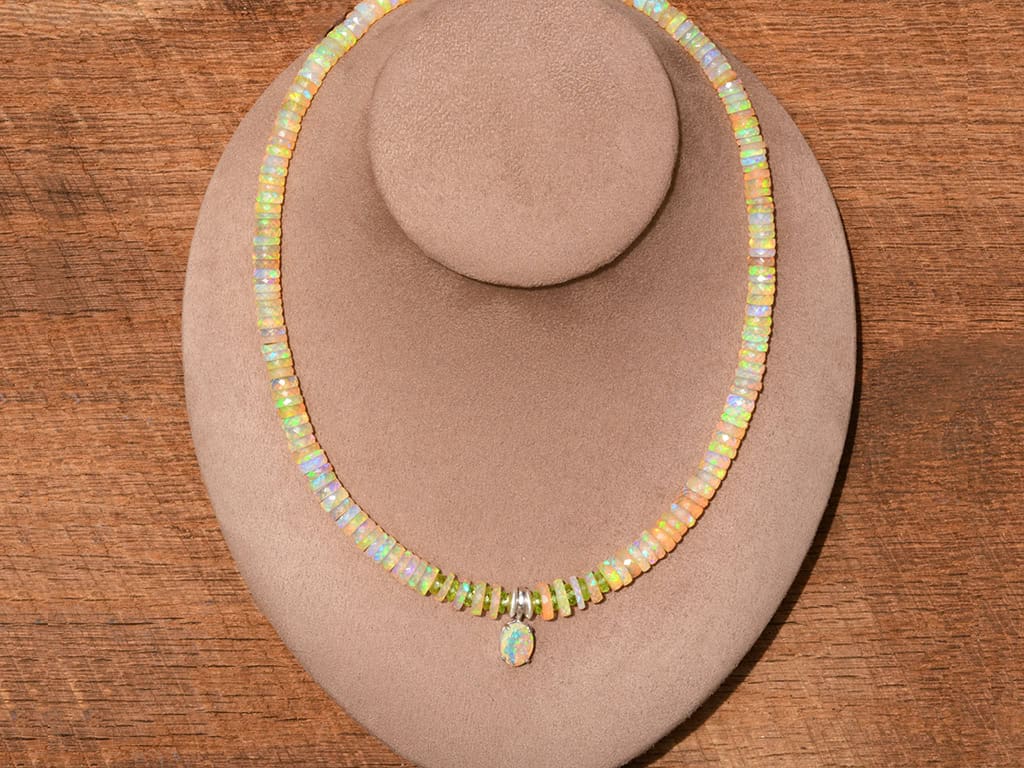
This is one of the most beautiful strands of faceted Ethiopian opal beads with a focal pendant attached. If you look carefully at the close-up photos of the necklace you will also see that there are faceted peridot bead spacers in the center of the necklace which complement the heavy green flash in the opal as well as some honey-colored undertones to the opal. The pendant is a 1.5 ct oval cut set in a sterling silver “basket” setting and is framed by two sterling silver saucer beads. The stone in the pendant displays what is know as “confetti” color and flash which is the term for lots of smaller tiny dots of color vs larger “flakes” of color.
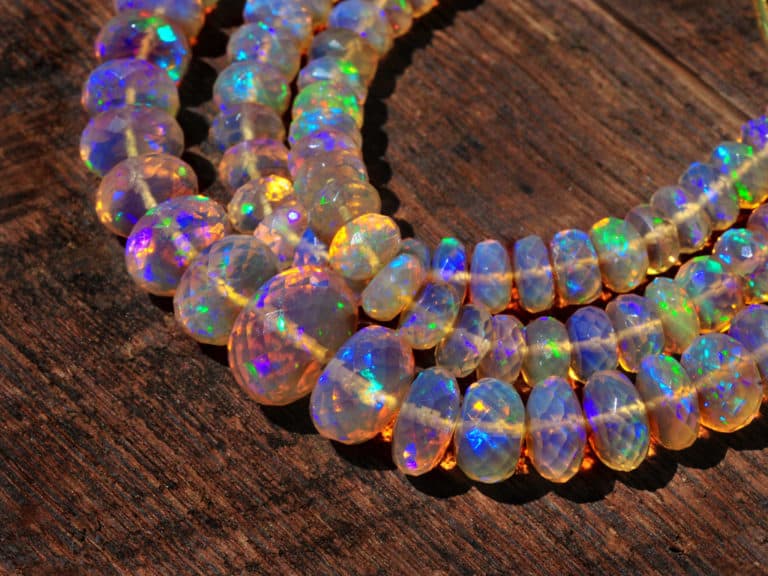
The opal beads are faceted around the edges but flat on the sides. This style is known as a “tyre” bead (English spelling). The peridot beads help the opal tire beads conform to a radius such as the center portion of the necklace. The beads range in size from approx. 9.7 mm down to 6.2 mm on the ends. Please see photos of pendant on display neck for size/scale.
The opal displays many colors including lots of green light blues, violets or magenta, and even some dark blues. None of these photos truly captures all of the color and brilliance of this strand. The base or background color of this material is a light honey-tone and it has been my experience that this type of material has the best color and the most color. Lighter or whiter Ethiopian opal just seems to have less color and is less brilliant.
Opal is particularly hard to photograph as the color it displays is not actually contained in the stone itself but a function of the light that is diffracted as it passes thru the stone in a prism effect. The play of color that we see is a function of structure of the material and will vary depending upon the type of light it is exposed to as well as the angle from which it is viewed.
One last note: Ethiopian opal displays beautiful color but the material is able to absorb water and other liquids such as cosmetics. If it gets wet, it will dry out naturally but the water may interfere with the visibility of the color of the opal temporarily. For this reason, it is not advisable to wear this piece if you go swimming or wear heavy cosmetics on your neck and chest. If you are concerned about this characteristic of Ethiopian opal, you might consider one of the Australian opal pieces we offer as it does not absorb water or other liquids.
Learn more about Opal at this link.